本校I-Lab師生赴東京大學參加「Global Health Youth Conference 2026」,參與國際松提案與模擬聯合國討論

本校創意發想實驗室(I-Lab)袁明豪老師於2026年8月27日至30日,率領六名優秀學生赴日本東京大學,參加「Global Health Youth Conference 2026(GHY 2026)」全球衛生青年研討會。該會議為延續先前與哈佛大學合作論壇所推動的創新計畫,今年由東京大學主辦,共吸引來自全球約30個國家、超過100位青年菁英與日本產、官、學界領袖齊聚交流。
本屆大會以「重構人群、社會與地球的健康,邁向永續未來(Reimagining Health Across People, Societies, and the Planet for a Sustainable Future)」為主題,倡議「行星健康(Planetary Health)」與「全球衛生(Global Health)」不應僅侷限於個體生理疾病的治療,而應提升至全球治理、地球生態環境與人類命運共同體的宏觀視野。會議強調,青年不應只是被動的跟隨者,更是攜帶創新思維、敢於破舊立新的變革推手。四天的密集行程涵蓋大師講座、企業參訪、國際黑客松提案及模擬聯合國討論,為與會青年搭建展現跨國影響力的舞台。

大師講座:從跨界協作到環境介入的公共衛生新思維
在星光熠熠的講師陣容中,曾任世界衛生組織(WHO)第二任總幹事、厚生勞動省醫療監察長,現任WHO執行委員會委員的鈴木康裕(Yasuhiro Suzuki)教授,特別提出「水平性初級醫療照護(Horizontal Primary Health Care, PHC)」的核心理念。鈴木教授指出,當前全球健康體系過度仰賴「由上而下、針對單一疾病」的垂直性資源投入;在國際援助資金遞減的現況下,此模式易使政府陷入資源分配的殘酷抉擇。相對地,「水平性PHC」強調建立全面、普及且深植社區的基礎防護網。藥學系蘇子芸同學對此表示獲得極大啟發,深感唯有跳脫各自為政的傳統思維,轉向跨界協作、相互創造價值,才能將醫療資源效益最大化。
針對全球肥胖與代謝健康議題,日本成育醫療研究中心三ッ浪真紀子(Makiko Mitsunami)主任則以日本經驗進行剖析。她指出,日本民眾維持纖瘦體態不僅歸功於少油、少鹽的個人飲食習慣,更源於政府對整體「食物環境」的制度性打造與落實執行。她強調,改善公共健康問題不能僅憑個人的自制力,更需要透過政策制度與環境設計共同促成。
對此,大會講者一句「不要使用二十世紀的工具,來解決二十一世紀的問題」,成為此行給予學生最深刻的提醒。公衛系鄭子湲同學表示,過去醫學教育多聚焦於「疾病、治療與醫療體系」等微觀面向;但本次跨國交流將視角拓展至AI、創新、數據、政策與國際關係等宏觀維度。她指出,當代許多健康瓶頸並非源於醫療技術不足,而是在於制度能否有效跨界整合。一項全球衛生政策要能真正落地發揮效益,除了仰賴醫衛專業,更需深刻考量政治可行性、國際合作與戰略資源的靈活配置。
Taiwan Can Help!臺日超高齡社會與全球衛生合作機會
在問答環節中,藥妝系陳冠綸同學把握機會向鈴木教授提問:在臺灣參與WHO受限的政治現實下,臺灣該如何實質貢獻全球衛生?臺日之間又有哪些可深化的合作領域?
鈴木教授表示,地緣政治衝突不應阻礙全球衛生合作,因為病毒與疫情的擴散從不受國界限制。他回顧臺灣過去建構全民健保制度時曾借鏡日本經驗,而面對未來,臺日兩國皆正面臨嚴峻的人口老化挑戰。日本作為全球最早進入超高齡社會的國家之一,其應對經驗涉及整合式醫療、長期照護、社區環境與整體社會制度的轉型,這正是雙方深化合作的絕佳契機。
陳同學於會後表示,這次與國際大師的深度互動,讓自己從「臺灣如何進入國際組織」的被動思考,轉變為「臺灣具備哪些獨特能力,能成為國際合作中不可或缺的一環」。未來,臺灣定能持續作為全球衛生(Global Health)領域中不可忽視的重要關鍵推手(Key Player)。
國際黑客松提案:跨國團隊切入亞洲升學壓力,榮獲「Excellence Award」首獎
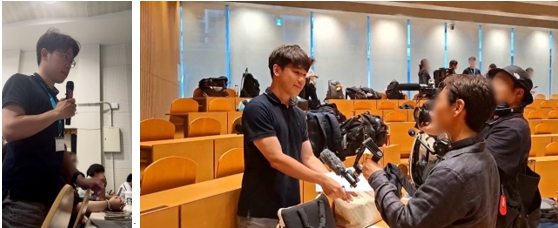
在緊接著展開的國際黑客松環節中,職安系林宥希同學與來自美國、孟加拉、韓國及日本的青年代表跨國組隊,針對「青少年心理健康問題、成因與社會影響」,重磅提出「學生福祉與多元發展框架(Student Wellbeing and Enrichment Framework)」提案。
團隊在兩天高強度的討論中發現,多數亞洲國家青年長期籠罩於高壓升學與補習班文化之下,過長的學習時數不僅耗損生理機能,更對心理健康造成深遠傷害。為突破傳統框架,團隊嘗試跨越單一學科限制,從教育制度與政策引導層面切入,提出創新解方;期望透過機制建立,引導並支持學生在學業之外發展體育、藝術等多元興趣,實現真正的全人發展與身心平衡。
討論期間,林同學分享了臺灣「108 課綱學習歷程檔案」的實施經驗,並與韓國前幾年因學習歷程引發惡性競爭、最終廢除並回歸全紙筆測驗的歷程進行對照。她感悟道:「與國際夥伴的交流以及專家的輔導評估,讓我深刻體會到政策從理念走向落地的複雜性。真正的『跨領域』不只是跨學科,更是將個人經驗、科學實證與行政可行性無縫連結的過程。」
此外,團隊中來自美國哈佛大學的成員,慣以「個體權益與當事人經驗」為出發點,強調政策須尊重個體自主選擇權,並展現出勇於試錯、快速提出社區行動策略的主動性;而臺、日、韓成員則對升學高壓有強烈共鳴,思維更著重於制度約束與社會規範。這場東西方思維的深度碰撞,讓提案既具備深厚的制度洞察,又富含敏捷的行動力,最終獲得評審導師的高度評價,榮獲「Excellence Award(傑出卓越獎)」首獎。

模擬聯合國討論:Team Taiwan關注多元家庭孕前照護 展現人權與包容價值
大會的另一重頭戲為「模擬聯合國(Model UN)」討論,本次以全球衛生熱門議題「孕前健康(Preconception Care)」為主題,邀請各國學生代表進行深度思辨。
代表Team Taiwan發言的公衛系趙芷恩同學,特別從「多元家庭」視角切入臺灣孕前健康的發展與挑戰。趙同學指出,臺灣自2019年成為亞洲首個同性婚姻合法化國家,並於2023年開放同性已婚伴侶共同收養子女,婚姻權益已有顯著進展。然而,「婚姻平等」並不等於「生育權益」已完全普及,例如女性同性伴侶在取得捐贈精子及人工生殖資源上仍受體制限制。
趙同學強調:「婚姻平等是起點,生育平等則是下一步。」孕前照護不應只關注生理健康,而應建立整合生理、心理、法律與社會支持的完整服務體系。醫療與公共衛生體系應打造更具包容性的環境,尊重不同性別、文化與家庭型態,讓每個人都能公平追求健康與建立家庭的權利。
中醫學系陳弘哲同學則分享:「活動要求在短時間內釐清問題並進行思辨。交流中我發現,各國關注的健康議題深受當地文化與制度影響:許多東南亞代表著重於『少女早婚懷孕』的衛教與社會安全網建立,而我們則分享了臺灣在『同性婚姻家庭與生育權』上的經驗。這種跨國對照讓我意識到,沒有單一的健康範本,每個地區都有其特定的社會議題需要應對。」陳同學表示,這次經驗不僅拓寬了他的國際視野,更深刻理解到唯有站在不同文化與社會背景的角度思考,才能真正通盤應對全球健康不平等(Global Health Inequity)的議題。

Reimagining Global Health Across Borders! I-Lab Team Attends the “Global Health Youth Conference 2026” at the University of Tokyo
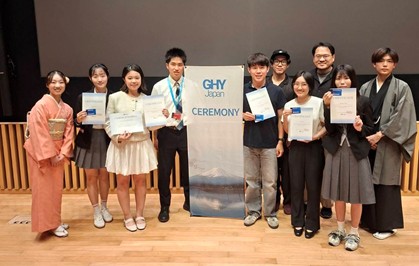
From August 27 to 30, 2026, Dr. Ming-Hao Yuan from the CMU I-Lab led six outstanding students to the University of Tokyo, Japan, to participate in the 2nd "Global Health Youth Conference 2026 (GHY 2026)", a newly launched initiative building upon previous collaborative forums with Harvard University. This year’s summit was hosted by the University of Tokyo, bringing together over 100 young leaders from about 30 countries alongside leaders from Japan's industrial, governmental, and academic sectors.
Under the theme "Reimagining Health Across People, Societies, and the Planet for a Sustainable Future," the summit advocated that "Planetary Health" and "Global Health" must extend beyond treating individual physiological illnesses. Instead, they should be elevated to a broader perspective encompassing global governance, Earth's ecosystems, and a shared future for humanity. The conference emphasized that youth should not merely be passive followers, but active changemakers driven by innovative mindsets and ready to challenge old paradigms. The four-day intensive program included keynote lectures, corporate visits, an international hackathon, and Model United Nations (MUN) debates, providing a stage for participating youth to showcase their cross-border impact.
Keynote Lectures: New Public Health Thinking from Interdisciplinary Collaboration to Environmental Intervention
Among the stellar lineup of speakers, Prof. Yasuhiro Suzuki—former 2nd Director-general of the World Health Organization (WHO), former Medical Affairs Advisor at Japan’s Ministry of Health, Labour and Welfare, and current member of the WHO Executive Board—introduced the core concept of "Horizontal Primary Health Care (PHC)." Prof. Suzuki pointed out that current global health systems rely excessively on top-down, disease-specific vertical resource allocations. Amid declining international aid funds, this model easily forces governments into harsh resource trade-offs. In contrast, "Horizontal PHC" emphasizes building a comprehensive, universal, and community-rooted primary care safety net. Inspired by this insight, Ms. Tzu-Yun Su, a student from the Department of Pharmacy, shared that maximizing the impact of medical resources requires breaking away from siloed thinking and shifting toward cross-disciplinary collaboration and mutual value creation.
Addressing global obesity and metabolic health, Dr. Makiko Mitsunami, Department Director at the National Center for Child Health and Development (NCCHD), analyzed the Japanese experience. She highlighted that the lean physical condition of the Japanese population is not only due to personal dietary habits low in oil and salt, but also stems from institutional efforts by the government to shape and implement a healthy "food environment." She stressed that improving public health cannot rely solely on individual willpower; it requires systemic policy making and environmental design.
A speaker’s remark—"Don't use 20th-century tools to solve 21st-century problems"—served as the most profound takeaway for the students. Ms. Tzu-Yuan Cheng, a student from the Department of Public Health, noted that medical education traditionally focuses on micro-level aspects like diseases, treatments, and medical systems. However, this international exchange broadened her perspective to macro dimensions, including AI, innovation, data, policy, and international relations. She pointed out that many modern health bottlenecks stem not from a lack of medical technology, but from whether institutions can integrate effectively across sectors. For a global health policy to truly take root and yield results, it must rely not only on medical expertise, but also on careful consideration of political feasibility, international cooperation, and the agile allocation of strategic resources.
Taiwan Can Help! Opportunities for Taiwan-Japan Global Health Cooperation in Super-Aged Societies
During the Q&A session, Mr. Kuan-Lun Chen, a student from the Department of Cosmeceuticals, seized the opportunity to ask Prof. Suzuki: Given the political realities that limit Taiwan's participation in the WHO, how can Taiwan make substantive contributions to global health, and what areas of cooperation can be deepened between Taiwan and Japan?
Prof. Suzuki responded that geopolitical conflict should not impede global health cooperation, as viruses and epidemics know no national borders. He recalled that Taiwan drew inspiration from Japan's experience when building its National Health Insurance system. Looking ahead, both Taiwan and Japan face severe challenges from population aging. As one of the world's earliest super-aged societies, Japan's experience encompasses integrated healthcare, long-term care, community environments, and systemic social transformation, offering an ideal opportunity for deepened collaboration.
After the session, Chen shared that this deep interaction with an international expert transformed his mindset from passive thinking—"How can Taiwan join international organizations?"—to active reflection—"What unique capabilities does Taiwan possess to become an indispensable partner in international cooperation?" Moving forward, Taiwan can surely continue to serve as a vital key player in global health.
International Hackathon Proposal: Addressing Academic Pressure in Asia to Win Top "Excellence Award"
In the subsequent international hackathon, Ms. Yu-Hsi Lin, a student from the Department of Occupational Safety and Health, formed a cross-national team with youth representatives from the United States, Bangladesh, South Korea, and Japan. Tackling the causes and social impacts of adolescent mental health issues, the team delivered a flagship proposal: the "Student Wellbeing and Enrichment Framework."
During two days of high-intensity discussion, the team identified that youth in many Asian countries live under the long shadow of high-stakes academic competition and cram-school culture. Excessive study hours not only exhaust students physically, but also inflict deep mental health harms. To break through traditional boundaries, the team transcended single-discipline limitations to propose innovative solutions at the educational policy and institutional level. Their mechanism aims to guide and support students in pursuing holistic development and balance beyond academics through sports, arts, and diverse interests.
During discussions, Lin shared Taiwan's experience implementing the "108 Curriculum Learning Portfolio" and contrasted it with South Korea's experience, where a similar learning portfolio caused fierce competition and was eventually abolished in favor of traditional written exams. She reflected: "Exchanging ideas with international partners and receiving expert mentorship helped me realize the complexity of translating policy from concept to reality. True interdisciplinary work isn't just combining academic fields; it's seamlessly connecting personal experience, scientific evidence, and administrative feasibility."
Furthermore, team members from Harvard University tended to start from individual rights and personal experiences, emphasizing respect for individual choices and showing a proactive willingness to iterate quickly through community action strategies. Meanwhile, members from Taiwan, Japan, and South Korea resonated strongly with academic pressure, focusing more on institutional constraints and social norms. This deep dialogue between Eastern and Western perspectives gave the proposal both profound institutional insight and agile action potential, earning high praise from the judges and the top "Excellence Award."
Model UN Discussion: Team Taiwan Highlights Preconception Care for Diverse Families, Demonstrating Human Rights and Inclusivity
Another highlight of the summit was the Model United Nations (MUN) session, centered on the major global health topic of "Preconception Care."
Speaking on behalf of Team Taiwan, Ms. Chih-En Chao, a student from the Department of Public Health, addressed the developments and challenges of preconception health in Taiwan through the lens of diverse family structures. Chao noted that Taiwan became the first country in Asia to legalize same-sex marriage in 2019 and expanded joint adoption rights to married same-sex couples in 2023, making significant strides in marriage equality. However, "marriage equality" does not automatically mean equal reproductive rights. For instance, female same-sex couples still face institutional hurdles in accessing donor sperm and assisted reproductive technology.
Chao emphasized: "Marriage equality is the starting line; reproductive equality is the next step." Preconception care should not focus solely on physical health, but should build an integrated service system supporting physical, psychological, legal, and social needs. Healthcare and public health systems must create a more inclusive environment that respects diverse genders, cultures, and family structures, ensuring everyone has an equal right to pursue health and build a family.
Mr. Hung-Che Chen, a student from the School of Chinese Medicine, reflected: "The event required us to analyze complex issues and engage in critical debate under tight time constraints. Through these exchanges, I realized that delegates prioritized different health issues based on their unique social contexts—many Southeast Asian representatives focused deeply on adolescent marriage and pregnancy support, while we shared Taiwan's perspectives on same-sex marriage and reproductive rights. This cross-cultural comparison helped me recognize that global health challenges vary widely depending on local societal structures." Chen noted that the experience expanded his global perspective and demonstrated that addressing global health inequities requires evaluating issues through diverse cultural and social lenses.